

All men read this... Candid Conversation with Dr. Jay. Understanding Testosterone Replacement Therapy
A sneak preview of our interview with Dr Jay, a hormone specialist practising in Pattaya, She sits down with us to discuss the realities of TRT, and the common misconceptions.

Dr Jay, a hormone specialist practising in Pattaya, sits down with us to discuss the realities of TRT, common misconceptions, and why individualised care matters more than ever replacement therapy has become something of a buzzword in men’s health circles, but separating fact from fiction can be challenging.
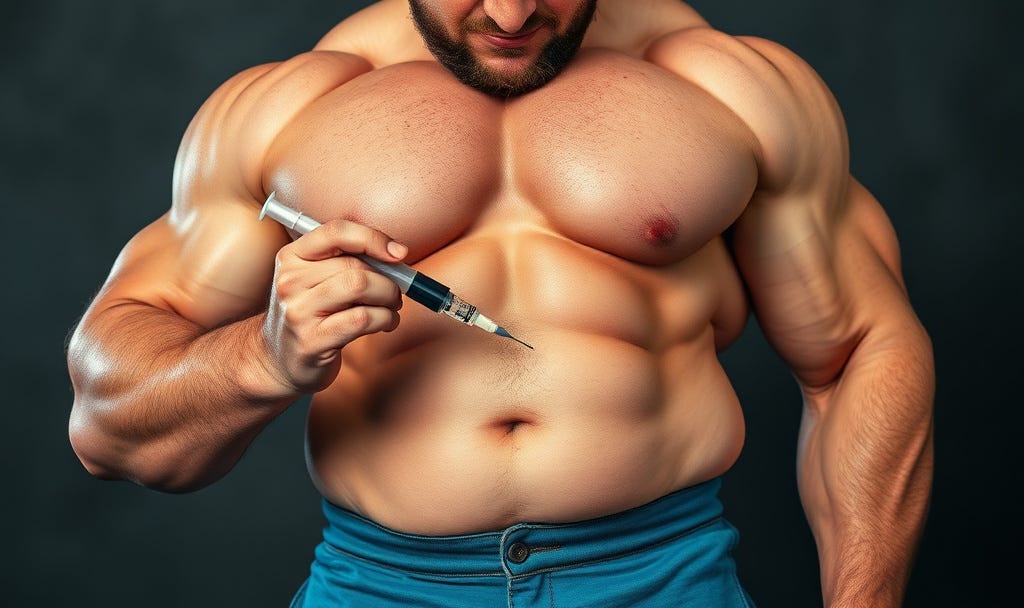
Understanding Your Testosterone Levels
When I ask about testing, Dr Jay explains the difference between the various measurements. “There’s total testosterone and free testosterone. Free testosterone is the key form we’re really interested in. The difference between total testosterone and free testosterone comes down to SHBG, the sex hormone binding globulin. It shows how much testosterone is actually active in your body.”
But here’s where it gets interesting. She doesn’t rely solely on numbers. “Even with total testosterone or free testosterone, these aren’t the last thing I use to decide if someone has low testosterone or not. It’s also about the symptoms.”
This makes sense when you think about it. Two men might have identical testosterone levels on paper, but feel completely different. For me personally, I know something’s off because of my body composition and those dreaded gout flare-ups. But as I explain to her, if I felt good otherwise, I probably wouldn’t be pursuing TRT at all.
“If you feel good already, you don’t need it,” she says matter-of-factly. “No matter what your levels are. If you feel good, your body is still good, you don’t need it. Keep your body producing naturally. Why would you need medication if everything’s working well?”
It’s a refreshingly honest take. She’s not trying to sell everyone on TRT. “Once people walk into the clinic, they have something on their mind. They feel something can be better. My job is to figure out what exactly they need. If testosterone can fix it, I’ll let you know. But if testosterone isn’t going to work for you or you don’t need it, I’ll also let you know. We may need to figure out the next option for you.”
Different Approaches for Different Ages
I’m curious about the different treatment options available. I know there are creams, injections, and I’ve read about something called enclomiphene, which apparently works differently from direct testosterone supplementation. I also mention that I’ve heard testosterone can lower sperm count, which matters if you still want to have children.
“There are so many conditions to decide which form or type of testosterone,” Dr Jay explains. “Enclomiphene goes through the brain to stimulate it to produce more natural testosterone. It’s the safer way to go because it boosts your natural testosterone production. It’s less harm, but also less benefit. For young men who still want to keep their fertility function, if they have symptoms, enclomiphene could be the first choice.”
She emphasises that age plays a crucial role. “For someone 40 years and above who already has symptoms like low energy, low sex drive, feeling not so good, it’s a different way to go.”
I clarify with her: so for younger men, say up to 45 who might still want a family, that’s probably the better route, whereas for me at 56, it’s probably not as useful?
“Yes,” she confirms.
Injections vs Creams: What Works Best?
When I ask about injections versus gels, she’s quite clear in her preference. “If you’re talking about gel or injection, from my point of view the injection is so much better. First, with injection you can determine very accurately how much you inject and how much you’ll have in your blood. You can fine-tune it. If anything goes wrong, I can detect it by the blood test.”
She explains that gel depends more on how much your body absorbs. I tell her about two Americans at my gym, both incredibly well-built. One is a very tall, well-built black guy who uses a cream he rubs into his shoulders. The other, equally well-built, injects. Both have incredible physiques.
“The black guy is 60 and looks like he should be 35,” I say. “Like an athlete.”
“Genetics,” she laughs. “Genetics is a big point. There’s research showing that South Africans and anyone with that genetic profile are the most sensitive to testosterone. They can bulk muscle a lot quicker and build it more easily.”
I have to agree. It’s true, they can get that really cut look quicker.
Still, she’s pragmatic about treatment options. “If you want to try the gel first, I have no problem. Let’s follow up together and see how things go. The gel also has some benefits. The skin has more enzymes that help convert testosterone to DHT. So if you personally want more sex drive, let’s go with the gel. If you have other health issues where injection could do harm, like cardiovascular things, go with the gel.”
The Cardiovascular Question
This is something I’ve been worried about, so I bring it up. I thank her for mentioning it because I was going to ask anyway. There’s research telling us that TRT and cardiovascular risk, particularly heart attacks and strokes, are linked. Not everyone, obviously. But is this because some men are taking too much testosterone and self-medicating?
“In the medical field, we know only people who are deficient and need it should use it,” she explains. “But unfortunately, testosterone itself can build so much muscle and is good for aesthetic looks. That’s why many people misuse it and use it in overdoses.”
She walks me through the science. Testosterone can increase cardiovascular risk by lowering HDL (the good cholesterol) and increasing LDL (the bad cholesterol). “Once your vessels lose flexibility enough, they’re easy to break. In the heart and brain, the vessels are very small, so it’s very easy to have a stroke or heart attack.”
There’s another mechanism at play too. “Testosterone binds through the muscle receptor, and the heart is a muscle. Once it binds to the heart, the heart gets bigger and bigger. That’s why people misusing it can have heart failure.”
I suggest that if someone’s overdosing and also in the gym pumping heavy weights, that must put even more pressure on the cardiovascular system, making it worse.
“If you’re overdosing, you’re doing harm to yourself,” she agrees. “It’s like running. If you run too much beyond a certain point, you harm your body. You can cause acute kidney injury. It’s the same with the gym and testosterone.”
She references Buddhist philosophy. “You need to go the middle way of everything. In life, in diet, not too much, not too little. If you’re doing it the middle way, you’re good.”
I emphasise this point because it’s exactly why professional oversight matters. “This is why it’s very important to have a doctor such as yourself making you take regular blood panels, to fine-tune how much you take and make sure you’re not taking too much. Because men of a certain age are also at risk for cancer, and it can stimulate that as well, right?”
The Cancer Concern
“Let’s say this way,” she carefully explains. “If you don’t have cancer, testosterone won’t give you cancer. But if you currently have it, it’ll make it worse for sure.”
So I ask about prostate screening. That’s done by blood test now, isn’t it?
“Blood test, yes. If the blood test shows it’s high, you do a CT scan to confirm whether it’s cancer or not.”
This is another important reason why you shouldn’t self-medicate without someone like her guiding and giving professional advice. There’s so much information on YouTube, TikTok, everything. People have researched so much, but as she points out: “I’m not the smartest doctor, but at least I can help you control yourself to not overdose. That’s also the point where I like to help a lot of people.”
I ask if she screens patients to check if they have an addictive personality, because those are the people who are going to keep overdosing.
“Obviously, sometimes I can tell. They come to the clinic and I check the blood. I see obviously it’s overdose, bad cholesterol is very high and good cholesterol is already so low. Their face looks obviously more aged than usual. The blood thickness is very high. Even when they see the blood test, nobody can help sometimes.”
It sounds to me, I suggest, that the perfect balance is to just lift the testosterone baseline up a bit so people can enjoy their life without expecting massive changes. It’s not a panacea to all good things, because you get that from family, worship, whatever it is in your life.
She agrees completely.
Is TRT a Lifelong Commitment?
I want to ask what I think is a good question. Many men worry that starting TRT means committing to it for life. Is this true or can you stop?
“Obviously you can stop,” she says. “But it depends on how much your baseline was at first.”
I ask about stopping and whether it affects natural testosterone production if you don’t use enclomiphene.
“The process of stopping and therapy is very complicated,” she explains. “This is a good point you’ve asked me, because this is one of the mistakes I’ve seen many people doing by themselves. The process isn’t just taking enclomiphene for two weeks and then continuing back on testosterone. That’s not true. The full process generally takes about two and a half months at least, and you need to wait about one month at least to restore natural function. Many guys do two weeks and think they’ve restored their natural levels already. That’s not true. You can check by blood test. It’s not coming back.”
Whether TRT becomes long-term depends on several factors. “If it’s a long-term commitment, it’s 50-50, depending on your baseline. If your baseline is very bad at first, like starting from 200 or 300, your body’s natural production wasn’t good to begin with. When you go on TRT it’s fine, but when you come off, it’s even more difficult. In this case you may need to go on lifelong.”
But there’s hope for others. “If your body’s natural level at first is like 500 or 600, and you have a commitment to maintain it with a really good lifestyle during that period, going to the gym, eating well to maintain muscle, when you stop the medication, your natural levels can even increase.”
I note that it really depends on the individual because not everyone is built the same. Some people might naturally have a higher baseline than others of the same age.
“You cannot use the range of the blood test to indicate yourself because you need to know that the blood test range is the average from many hundred million people,” she explains.
Advice for Men Considering TRT
I ask what advice she’d give to men considering TRT. What questions should they be asking their doctors, and what red flags should make them seek a second opinion?
“I need to know how old are you. I need to know your gender,” she begins. She clarifies that unless you’re a man, it’s a different story. “Age is very important. At least age can tell me which way to go, whether to go more natural or directly on testosterone. I need to know about underlying diseases, genetically within the family, past medical history. Did you have some brain trauma? Many traumatic brain injuries cause low testosterone.”
So it’s really important to give her all the information, I confirm. Family history, genetics, if men in the family are prone to heart attacks or strokes. Because just doing a blood panel doesn’t give enough data.
“The blood panel isn’t going to give enough data,” she agrees. “The most important is the symptoms, the underlying diseases, all the details. It’s not just that everybody uses the same dosage. You need to personalise it for each body. Some people have really high aromatisation, which means they convert too much to oestrogen. There are different protocols for that.”
I observe that there’s an awful lot of science behind this, more than people really understand.
“It’s very personalised,” she confirms.
Knowing Your Baseline Early
She offers particularly useful advice for younger men. “Do it as young as you can. You need to follow up your blood work. If you’re 25, go check your blood test. Have it as your baseline, see how it progresses. When you’re 40 years old, check it again. If it’s still not much different, you’re okay.”
That’s really good advice, I say. So what we can tell younger men is: go and have it checked just so you know where your baseline is for future life.
“Yeah,” she agrees enthusiastically.
An Open-Door Policy
I ask if there’s anything else she thinks should be included in the article, anything I’ve missed.
“From my point, I really welcome everybody. No matter what drug you use, whether you’re a bodybuilder, whether you already use testosterone by yourself, I really feel free to talk with everybody. I love to be educated and most of the time I’ve learned so much from bodybuilders because they have experience with these drugs. Please feel free to come. I would like to share all the knowledge with you. You don’t need to worry that I’m going to judge you or tell you not to use it. I’m not that type of person.”
So really, I say, you have what we’d call an open surgery. Men can come in without any feeling of being judged, which I think is really important. Because a lot of men will have psychological worries or possible issues around this. They feel they may be less of a man now because they need it.
She agrees completely. “Yeah.”
I don’t have that issue at all, I tell her. I’ve got two daughters, I’m already good. But some men might overthink it, internalise it.
“Yeah,” she says, understanding the point.
Final Thoughts
What becomes clear from talking to Dr Jay is that hormone therapy isn’t something to approach casually. It requires proper testing, ongoing monitoring, and honest communication with a knowledgeable doctor who sees you as an individual, not just a set of lab values.
The good news? With the right approach and professional guidance, men can address genuine hormonal issues safely and effectively. The key is doing it properly, with someone who knows what they’re doing and, perhaps most importantly, someone who’ll tell you when you don’t need treatment at all.
As our conversation winds down, I tell her I really appreciate her time. It’s been fascinating, and I can see many potential conversations going forward that will loop back to her and her clinic.
She mentions she travels to Bangkok at least two or three times a month, sometimes once a week, because customers fly to see her. Many come from Singapore. They used to meet in Bangkok, but lately they prefer to come to Pattaya because they’d like to see the sea.
Dr Jay practises at her clinic in Pattaya and travels to Bangkok regularly to see patients. She specialises in hormone replacement therapy for both men and women, as well as medically supervised weight loss programmes.